
Beginner Guide: How to Start Organic Farming in Haryana (PGS, Subsidy & Profit)
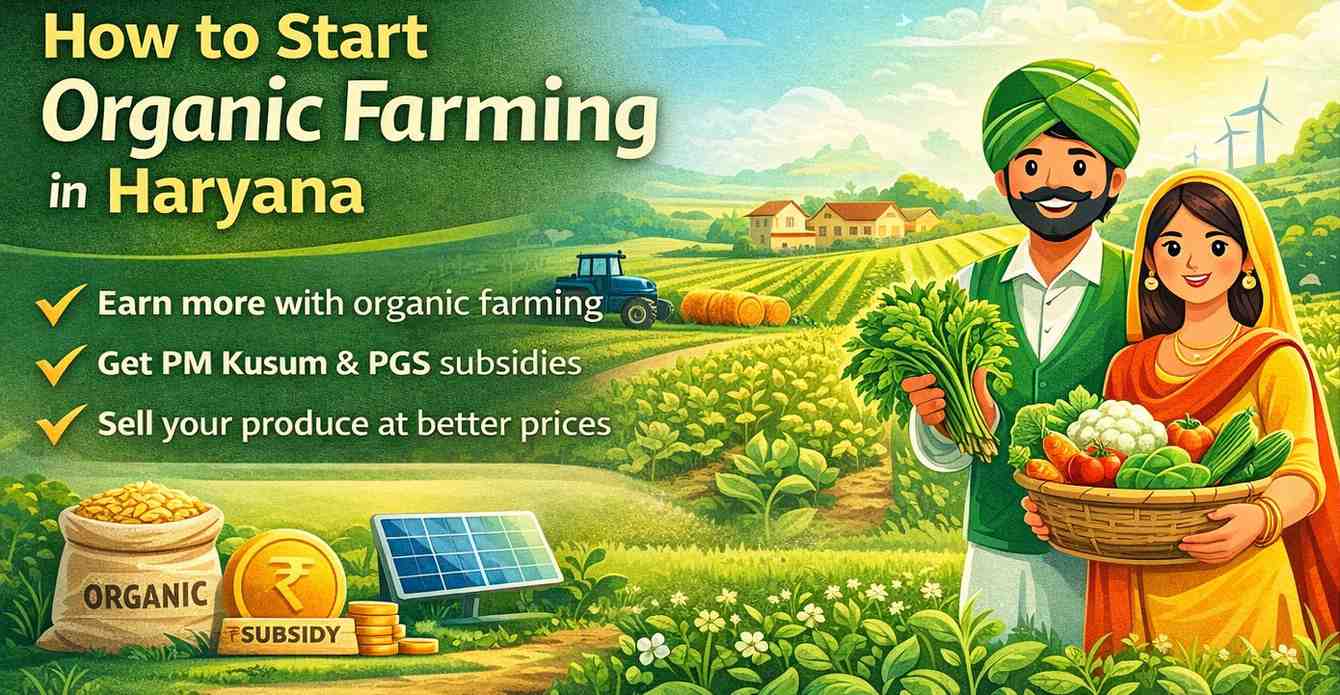
Organic farming is becoming increasingly popular in Haryana as farmers look for ways to reduce input costs, improve soil health, and earn higher profits. With rising demand for chemical-free vegetables, fruits, and grains in cities like Bhiwani, Hisar, Rohtak, and Gurgaon, organic farming is now a profitable and sustainable option for small and medium farmers.
This beginner-friendly guide explains how to start organic farming in Haryana, certification through PGS, government subsidies, and how to sell your produce at better prices.
What is Organic Farming?
Organic farming is a natural method of cultivation that avoids chemical fertilizers, pesticides, and hybrid growth promoters. Instead, it uses:
- Desi cow dung and cow urine
- Vermicompost
- Green manure
- Crop rotation
- Bio-pesticides
This method improves soil fertility, reduces farming costs, and produces healthier food.
Why Organic Farming is Profitable in Haryana
- High demand for organic food in nearby cities
- Lower input cost compared to chemical farming
- Government subsidy support
- Better soil water retention in dry areas
- Premium selling price for produce
Step-by-Step Guide to Start Organic Farming
1. Select the Right Land
Choose land that has minimum chemical usage in the past. If your field was previously used for chemical farming, a conversion period of 2–3 years is required.
2. Arrange Organic Inputs
Prepare:
- Vermicompost unit
- NADEP compost
- Jeevamrit & Beejamrit
These reduce fertilizer cost and improve soil structure.
3. Choose Suitable Crops for Haryana
Best crops for organic farming in Haryana:
- Wheat & mustard
- Desi gram
- Vegetables (tomato, onion, potato, spinach)
- Fruits (guava, ber, amla)
- Fodder crops
4. Crop Rotation & Mixed Farming
Crop rotation naturally maintains soil nutrients and reduces pest attacks. Mixed farming with dairy provides additional income.
PGS Organic Certification – Low Cost for Small Farmers
PGS (Participatory Guarantee System) is the most suitable organic certification for small farmers and farmer groups in Haryana.
Benefits of PGS Certification
- No high certification cost
- Simple documentation
- Government support
- Better market price
How to Apply for PGS in Haryana
- Create a farmer group (minimum 5 farmers)
- Register on the PGS India portal
- Maintain farm records
- Field inspection by group members
After certification, farmers can sell produce as organic in local and national markets.
Government Subsidies for Organic Farming in Haryana
1. Paramparagat Krishi Vikas Yojana (PKVY)
This scheme provides financial assistance for organic inputs, training, and certification through PGS.
Benefit: ₹50,000 per hectare for 3 years.
2. National Mission on Natural Farming (NMNF)
Farmers receive support for natural farming practices including bio-input preparation and training.
3. PM Kusum Yojana
Subsidy for solar pumps which reduces irrigation cost in organic farming.
4. Soil Health Card Scheme
Helps farmers understand soil nutrients and reduce unnecessary input expenses.
5. Agriculture Infrastructure Fund
Provides low-interest loans for storage, grading, and organic produce processing units.
Where to Sell Organic Produce in Haryana
- Local organic markets
- Directly to consumers in cities
- Organic retail stores
- Online platforms
- List your farm on OnlineBhiwani
Direct selling gives 20–40% higher profit compared to mandi sales.
Income Potential from Organic Farming
In the first 1–2 years, yield may be slightly lower during the conversion period. But after soil becomes fertile:
- Input cost reduces by 40–60%
- Selling price increases by 20–50%
- Net profit becomes higher than chemical farming
Common Mistakes to Avoid
- Stopping organic practices in between
- Not maintaining farm records for certification
- Choosing high-chemical-use land
- Ignoring local market demand
Final Words
Organic farming in Haryana is not just a farming method — it is a profitable business opportunity. With PGS certification, government subsidies, and direct marketing, farmers can build a sustainable and high-income model.
If you start with proper planning and patience, organic farming can give long-term financial security while keeping the soil and environment healthy.