
Rainwater Harvesting – Methods, Benefits and Government Schemes in India
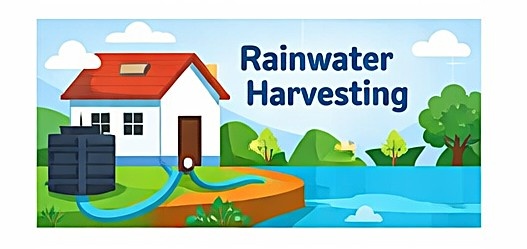
Water is one of the most valuable natural resources on Earth. However, rapid population growth, urbanization, and climate change have created serious water shortages in many parts of India. To solve this problem, water conservation methods such as rainwater harvesting are becoming increasingly important.
Rainwater harvesting is the process of collecting and storing rainwater for future use. This water can be used for irrigation, household purposes, groundwater recharge, and other daily needs.
Many governments and organizations are promoting rainwater harvesting as an effective solution for water conservation.
What is Rainwater Harvesting?
Rainwater harvesting is the practice of collecting rainwater from rooftops, open areas, or other surfaces and storing it for later use. Instead of letting rainwater flow into drains and rivers, it is captured and stored in tanks or underground reservoirs.
This method helps reduce dependence on groundwater and municipal water supplies.
Why Rainwater Harvesting is Important
India faces water scarcity in many regions, especially during summer months. Rainwater harvesting helps manage water resources more efficiently.
- Reduces water shortage
- Improves groundwater levels
- Reduces flooding and soil erosion
- Provides an additional water source
- Promotes sustainable water management
Common Methods of Rainwater Harvesting
Several techniques are used to collect and store rainwater depending on the location and available infrastructure.
1. Rooftop Rainwater Harvesting
This is one of the most common methods used in urban areas. Rainwater falling on rooftops is collected through pipes and stored in tanks or underground storage systems.
The stored water can be used for gardening, washing, and other household purposes.
2. Surface Runoff Harvesting
In this method, rainwater flowing on the ground surface is collected in ponds, reservoirs, or storage tanks. This technique is often used in rural areas for irrigation and agricultural purposes.
3. Recharge Pits
Recharge pits allow rainwater to seep into the ground and replenish underground water reserves. These pits are usually filled with sand, gravel, and stones to filter the water.
4. Percolation Tanks
Percolation tanks store rainwater temporarily and allow it to gradually infiltrate into the soil. This method helps increase groundwater levels.
5. Check Dams
Small check dams are constructed across streams or drainage channels to slow down water flow and allow water to infiltrate into the ground.
Benefits of Rainwater Harvesting
Rainwater harvesting offers several environmental and economic advantages.
- Reduces dependence on groundwater
- Improves water availability during dry seasons
- Reduces water bills
- Supports agriculture and irrigation
- Helps maintain ecological balance
In cities, rainwater harvesting can also reduce pressure on municipal water supply systems.
Rainwater Harvesting for Farmers
Farmers can benefit greatly from rainwater harvesting techniques. Storing rainwater allows farmers to irrigate crops during dry periods and improves agricultural productivity.
Farm ponds and water storage tanks are commonly used for this purpose.
Government Schemes Supporting Rainwater Harvesting
The Government of India and various state governments promote rainwater harvesting through water conservation programs.
Atal Bhujal Yojana
This program focuses on improving groundwater management and encouraging sustainable water use practices.
Pradhan Mantri Krishi Sinchai Yojana (PMKSY)
This scheme promotes efficient irrigation methods and water conservation techniques, including rainwater harvesting.
Jal Shakti Abhiyan
This nationwide campaign focuses on water conservation and rainwater harvesting initiatives across various states.
How to Start Rainwater Harvesting at Home
Homeowners can implement simple rainwater harvesting systems.
- Install gutters on rooftops
- Connect pipes to storage tanks
- Use filters to remove debris
- Store water safely for future use
Even small systems can collect a significant amount of water during the rainy season.
Tips for Effective Rainwater Harvesting
- Keep rooftop surfaces clean
- Install proper filtration systems
- Maintain storage tanks regularly
- Use collected water efficiently
Final Words
Rainwater harvesting is a simple yet powerful method for conserving water and addressing water shortages. By collecting and storing rainwater, individuals, communities, and farmers can reduce dependence on groundwater and ensure sustainable water use.
With growing environmental challenges, adopting rainwater harvesting practices can play an important role in protecting water resources for future generations.